
Table of Contents:
1. The Vulnerability of Inner Plastic Ribs
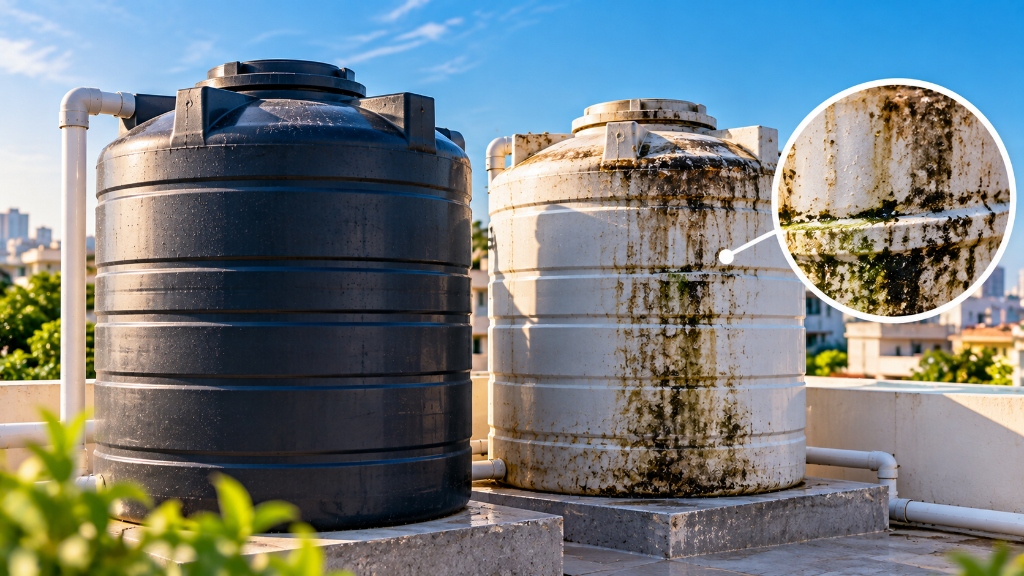
Plastic tanks are designed with horizontal ribs and corrugations to provide structural rigidity against outward water pressure. Unfortunately, these recessed ribs act as natural ledges where fine sediment and algae spores readily settle.
Traditional flat brushes often glide over these indentations, leaving stubborn bacterial slime intact along the rib valleys unless specialized contoured brushing tools and high-pressure water jets are applied.
2. The Danger of Abrasive Wire Brushes and Harsh Chemicals
A common mistake made during untrained domestic tank cleaning is using metal wire brushes or corrosive acid-based chemicals. Metal bristles create microscopic scratches across the food-grade plastic inner lining.
These micro-abrasions permanently damage the smooth surface, creating ideal crevices for aggressive algae colonization that becomes increasingly difficult to remove in subsequent months.
Always insist on soft-to-medium nylon bristles and food-safe, non-acidic sanitization flushes that protect your tank's polymer integrity and preserve drinking-water safety.
3. Sunlight, Heat, and Algae Acceleration
Rooftop tanks in Hyderabad endure intense summer temperatures. When sunlight penetrates thin or single-layer plastic walls, internal water temperatures rise, creating a greenhouse effect that accelerates green algae multiplication.
Regular 6-month cleaning removes early algae colonies before they produce noticeable foul odors or discolor household bath and kitchen water.
Key Takeaways for Property Owners
- •Never use harsh wire brushes or acidic chemicals on plastic or Sintex tanks.
- •Clean recessed structural ribs thoroughly with contoured soft bristles.
- •Routine 6-month service prevents rapid rooftop algae buildup caused by direct sunlight.
- •Ensure tank lids are tightly secured to prevent dust infiltration.