

Table of Contents:
1. Heavy Sediment Layering and Pump Strain
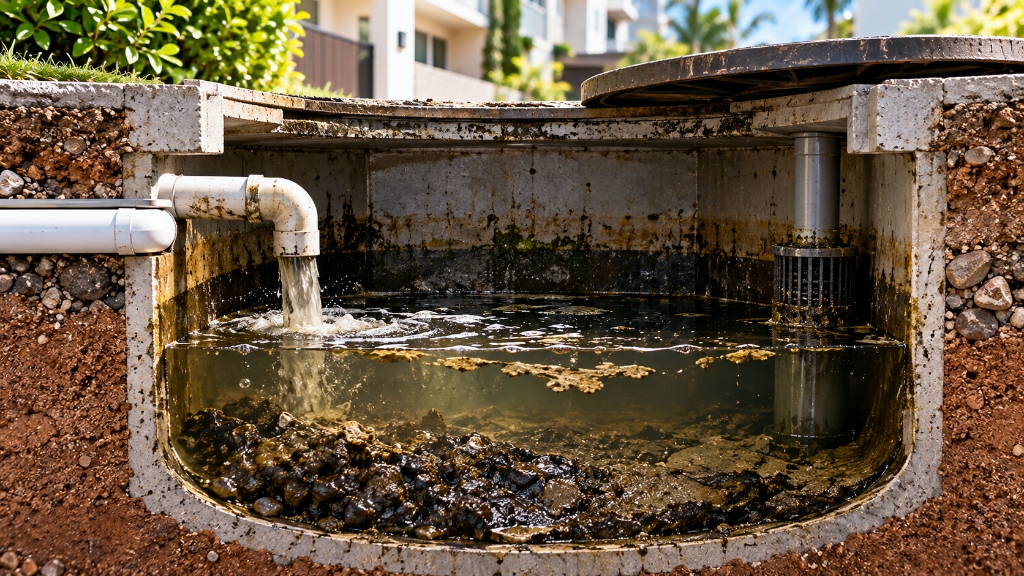
Every supply cycle delivers microscopic sand particles and soil silt that rapidly settle onto the floor of your underground sump. As this sediment compacts, it forms a thick, viscous sludge layer.
When your submersible or monoblock motor pumps water from the sump up to rooftop overhead tanks, it pulls from this sludge bed. Gritty sand particles enter the motor impeller, causing abrasive wear, premature pump overheating, and motor failure.
Keeping your underground sump free of bottom silt prevents sand abrasion inside your motor pump, saving thousands of rupees in unexpected motor rewinding and plumbing repairs.
2. Upstream Contamination of Rooftop Tanks
Your rooftop overhead tanks receive their water directly from your underground sump. If the sump contains settled silt, algae, or stagnant residue, these contaminants get pumped directly to your overhead distribution tanks.
Even if you clean your overhead tanks, they will rapidly become re-contaminated if the primary underground collection sump is neglected.
3. Porous Masonry and Micro-Crack Vulnerabilities
Concrete (RCC) and brick masonry sumps are susceptible to micro-cracks over time. When thick organic sludge sits undisturbed along corners and floor joints, it can foster bacterial biofilms that weaken waterproof plaster coatings.
Periodic professional cleaning allows for visual inspection of the sump's structural integrity, allowing property owners to spot minor plaster peeling or root ingress before major water leakage occurs.
4. Stagnant Odor and Discolored Bath Water
Underground sumps often experience stagnant air pockets. Organic matter settling in the absence of sunlight creates anaerobic conditions that impart a musty, stale odor to your domestic water supply.
A comprehensive cleaning service uses high-pressure water washing and vacuum de-sludging to scrub porous concrete walls clean and flush out all stagnant residue.
Key Takeaways for Property Owners
- •Underground sumps act as the primary filter trap for all incoming sand and municipal silt.
- •Bottom sludge damages motor pump impellers and causes frequent pump breakdowns.
- •Cleaning your underground sump is essential to keep rooftop overhead tanks clean.
- •Schedule professional sump de-sludging at least twice a year.